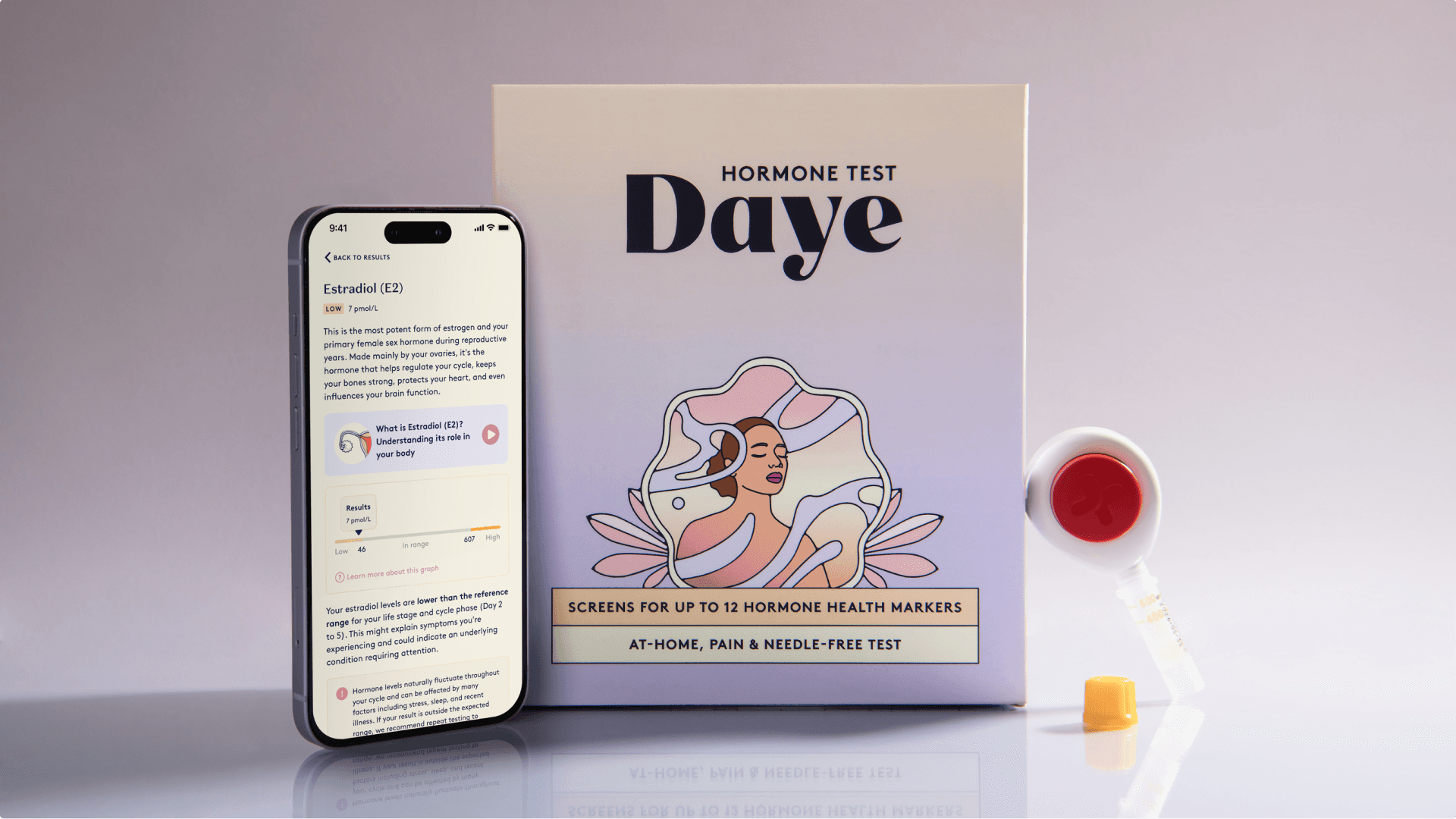
Hormone Test: 0 -> 1 in 6 months
End-to-end product ownership and design lead on Daye's first hormone panel. From defining what to test, to designing how results are understood, to shipping a live product used by thousands of women.
Hormone Test: 0 -> 1 in 6 months
End-to-end product ownership and design lead on Daye's first hormone panel. From defining what to test, to designing how results are understood, to shipping a live product used by thousands of women.
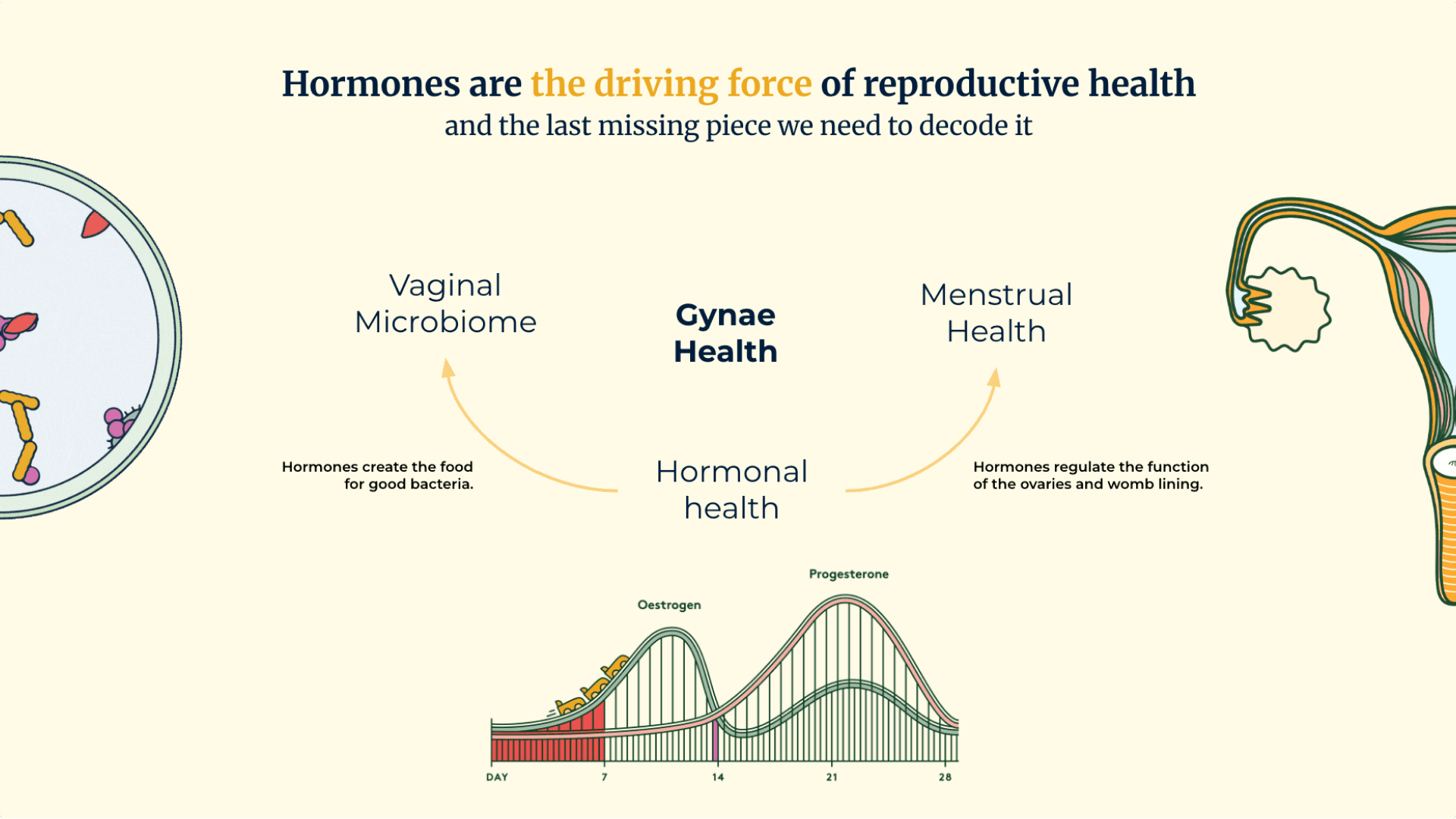
Complex health data that most products get wrong
Women trying to understand their hormonal health had a frustrating choice: book an NHS appointment and wait months, or buy a consumer test that returned numbers with no meaningful context. Neither option actually helped them understand what their results meant or what to do next.
The opportunity was to build something in between: clinically rigorous, but designed to be genuinely useful to a non-clinical user. That meant the product design problem wasn't just how to present data. It was how to make complex, context-dependent science feel personal and actionable.
Complex health data that most products get wrong
Women trying to understand their hormonal health had a frustrating choice: book an NHS appointment and wait months, or buy a consumer test that returned numbers with no meaningful context. Neither option actually helped them understand what their results meant or what to do next.
The opportunity was to build something in between: clinically rigorous, but designed to be genuinely useful to a non-clinical user. That meant the product design problem wasn't just how to present data. It was how to make complex, context-dependent science feel personal and actionable.
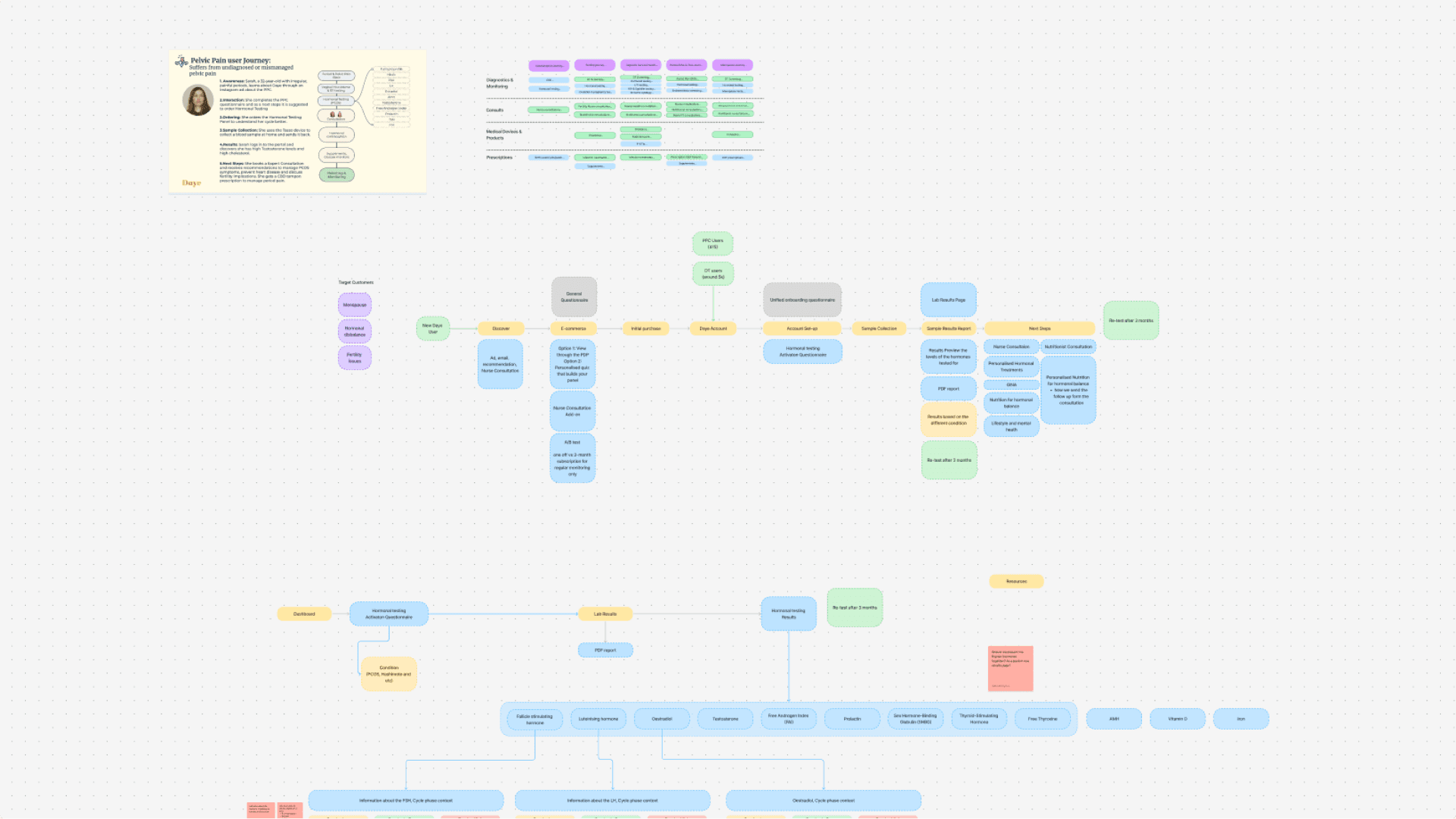
Defining the panel: what to test and why it matters
The first challenge was not design. It was defining what the product should actually test for. We ran a series of workshops with our Medical Director, clinical advisors, and lab partners to map what was clinically meaningful, technically achievable from a home finger-prick blood sample, and relevant to the women most likely to buy it.
We anchored on the primary user: women in their late twenties to early forties, thinking about fertility, experiencing unexplained symptoms, or simply wanting a hormonal baseline. From there we worked backwards to a panel covering fertility markers, thyroid function, and broader hormonal indicators. Every biomarker had to earn its place against regulatory constraints and lab capability.
Defining the panel: what to test and why it matters
The first challenge was not design. It was defining what the product should actually test for. We ran a series of workshops with our Medical Director, clinical advisors, and lab partners to map what was clinically meaningful, technically achievable from a home finger-prick blood sample, and relevant to the women most likely to buy it.
We anchored on the primary user: women in their late twenties to early forties, thinking about fertility, experiencing unexplained symptoms, or simply wanting a hormonal baseline. From there we worked backwards to a panel covering fertility markers, thyroid function, and broader hormonal indicators. Every biomarker had to earn its place against regulatory constraints and lab capability.
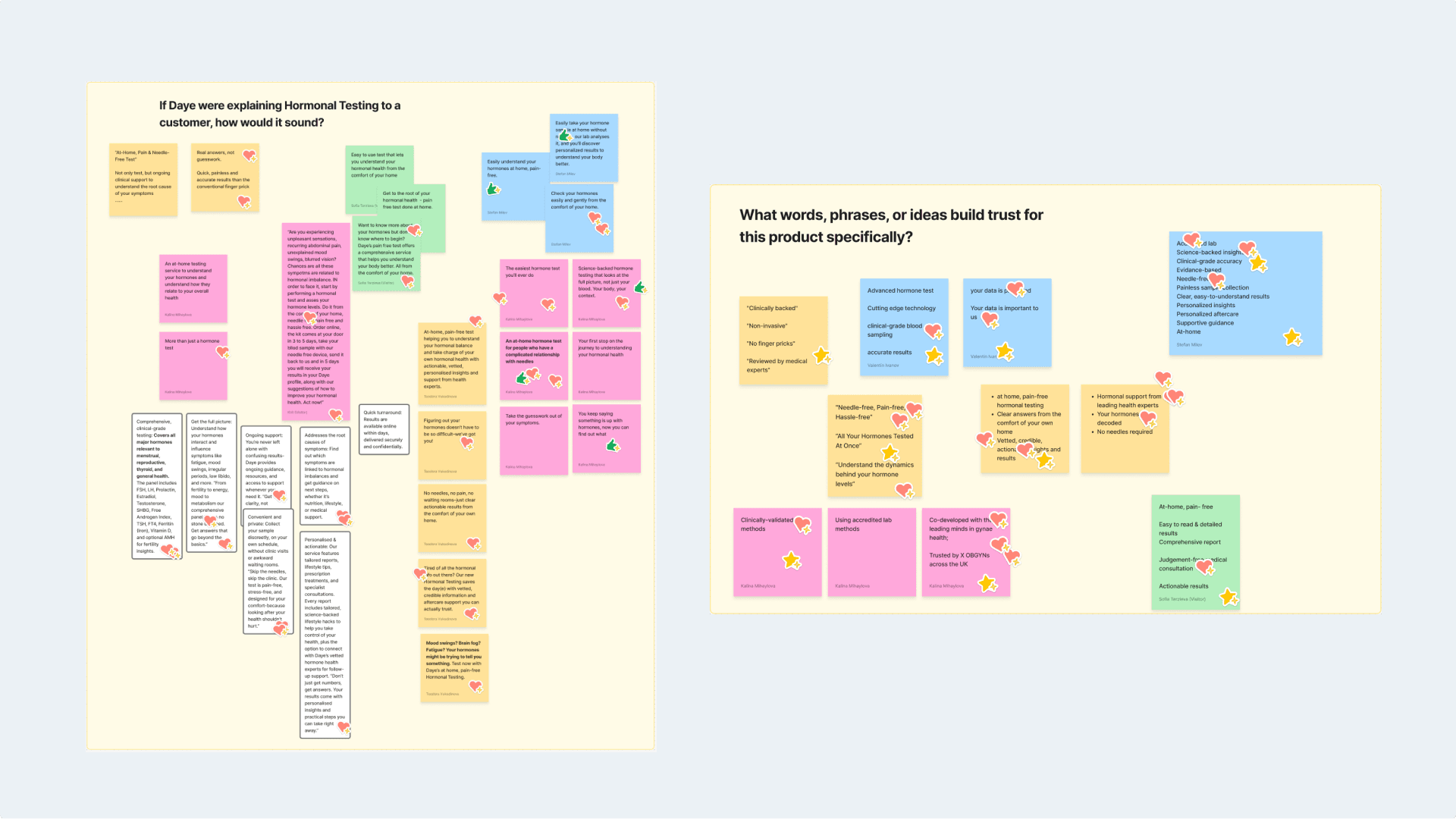
A small, focused squad that moved fast
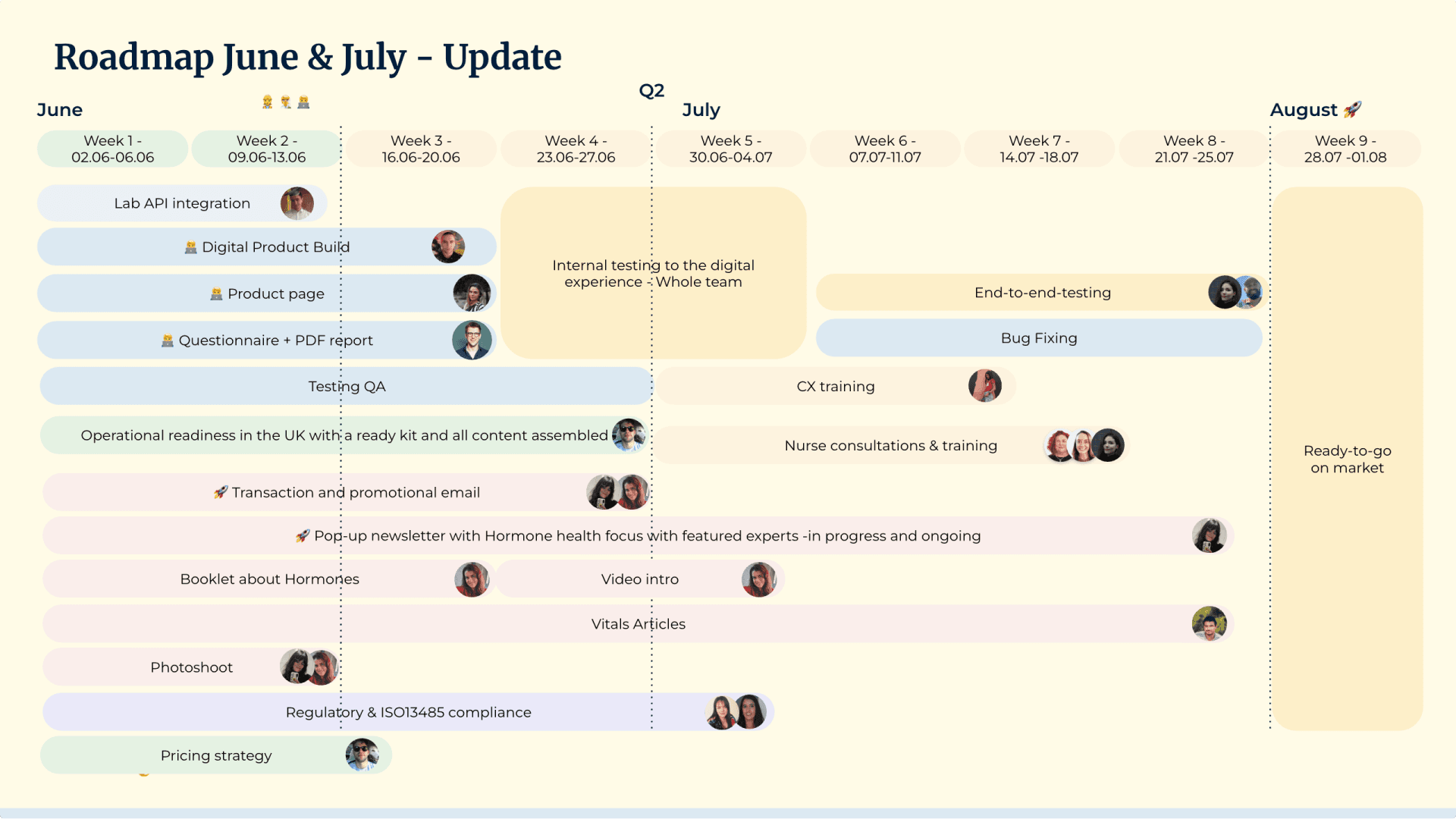
We built this product as a tight cross-functional squad: clinical, engineering, operations, and marketing, all working closely together from the start. There was no handoff culture. Decisions were made in the room, with the right people present, which is what allowed us to move at the pace we did.
As product design lead and product owner, my role spanned setting direction, running discovery, designing the full experience end to end, coordinating the lab integration, and driving delivery to launch. But the reason it worked was the team. Everyone was invested in getting this right, and the trust between disciplines meant we could move quickly without cutting corners on the things that mattered, especially on the clinical side.
A small, focused squad that moved fast
We built this product as a tight cross-functional squad: clinical, engineering, operations, and marketing, all working closely together from the start. There was no handoff culture. Decisions were made in the room, with the right people present, which is what allowed us to move at the pace we did.
As product design lead and product owner, my role spanned setting direction, running discovery, designing the full experience end to end, coordinating the lab integration, and driving delivery to launch. But the reason it worked was the team. Everyone was invested in getting this right, and the trust between disciplines meant we could move quickly without cutting corners on the things that mattered, especially on the clinical side.
From first question to next steps: designing the full journey
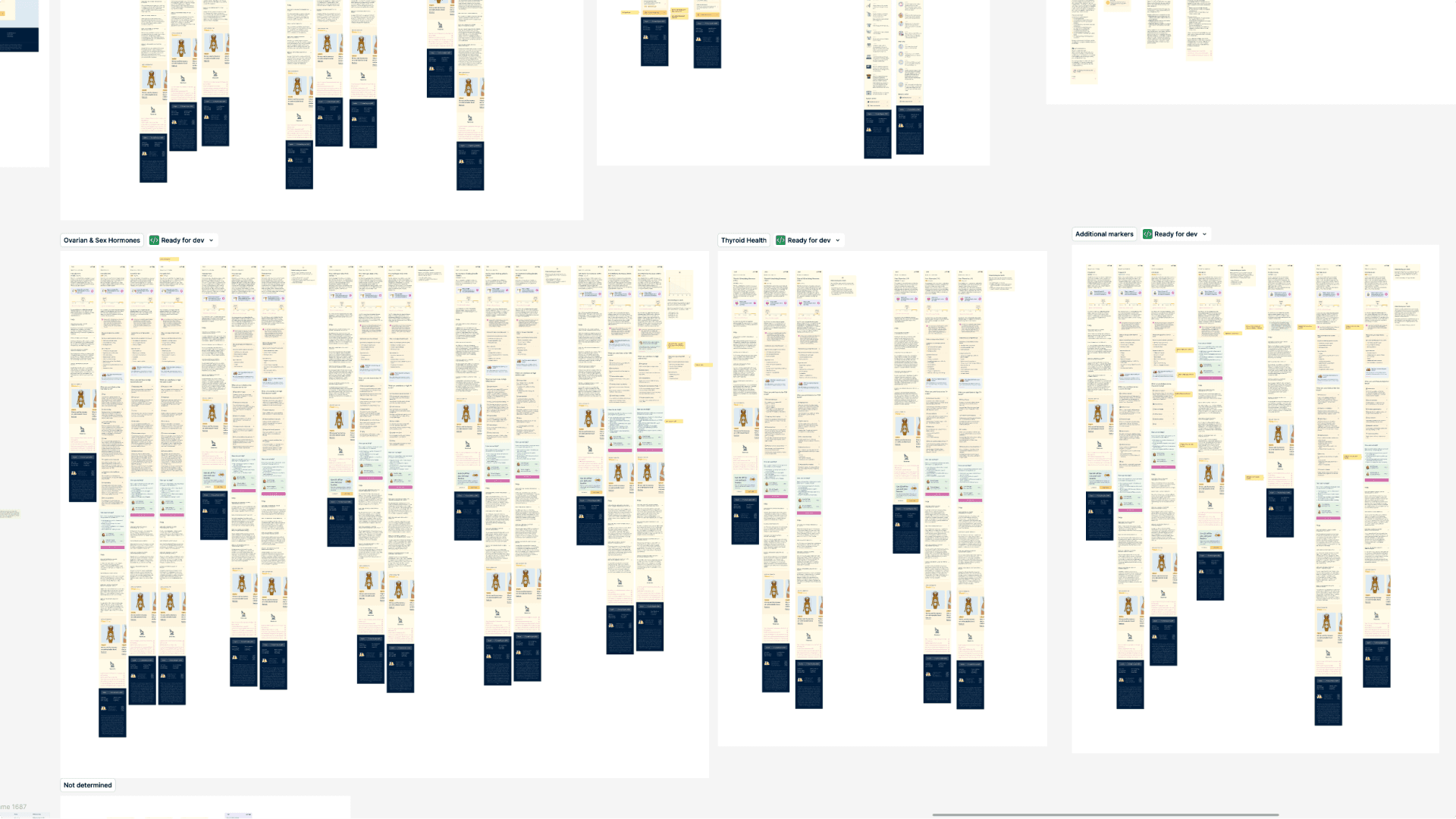
We designed the experience as a complete journey, not a results screen with a purchase flow bolted on. Every stage had its own brief, its own user problem to solve, and its own balance to strike between clinical rigour and genuine usability.
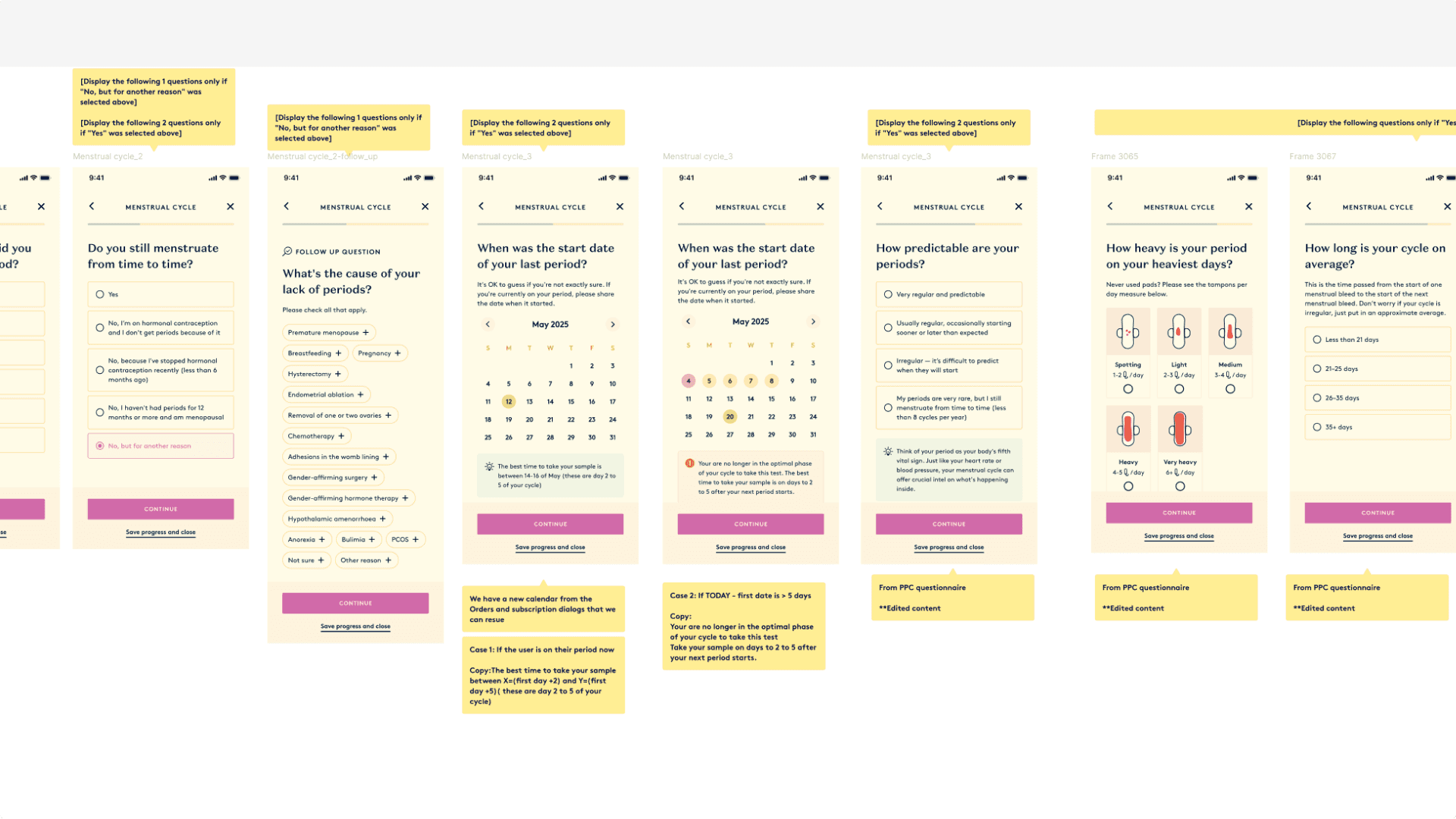
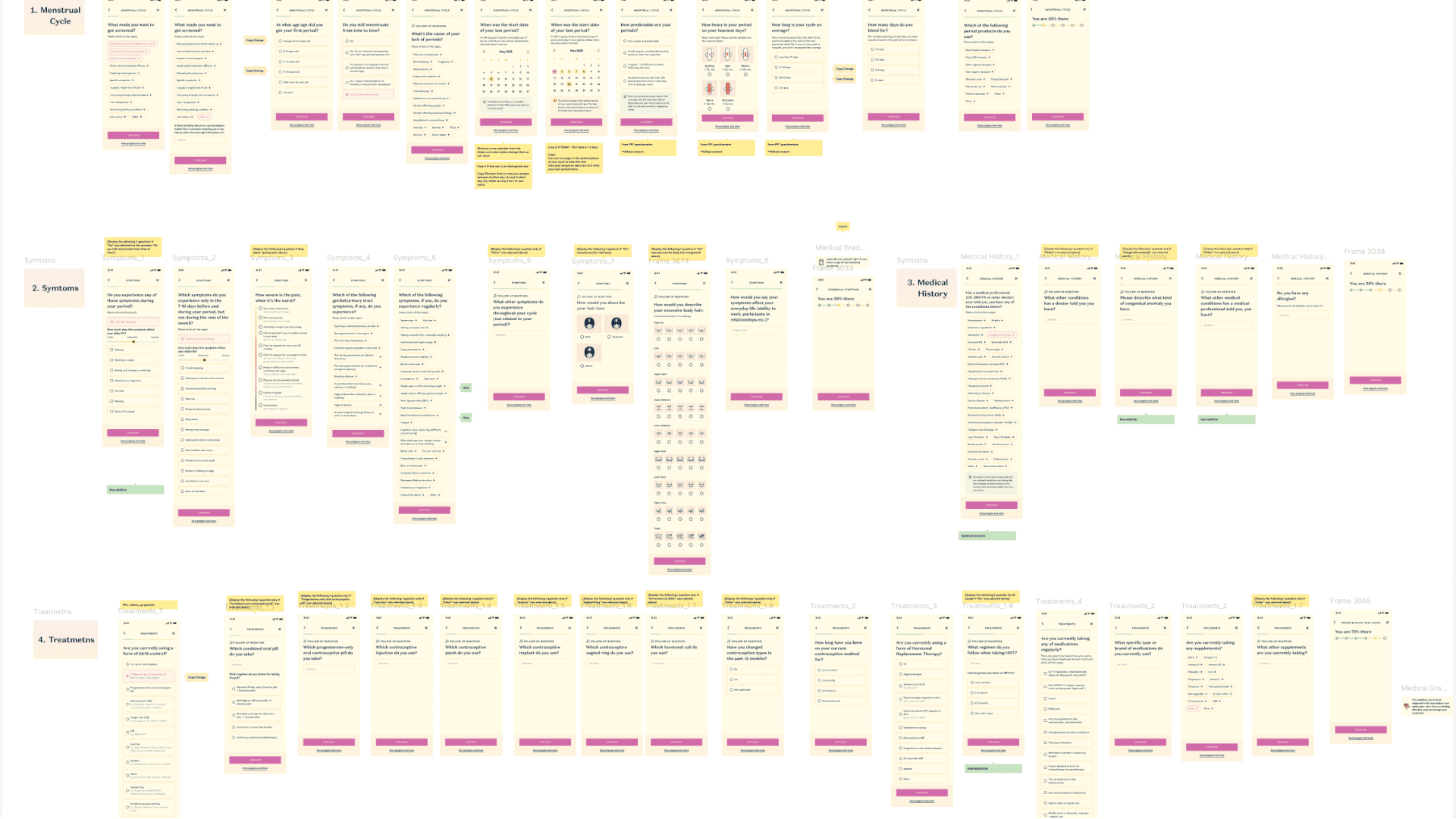
The activation questionnaire was the foundation. Before a user collected their sample, we needed to capture the context that would make their results meaningful: cycle phase, contraception, known conditions, current symptoms, and what they were hoping to learn. The design challenge was precision versus drop-off. Too many questions and users abandon before they start. Too few and the results lack the context to be useful. We iterated this flow several times with clinical input until every question felt purposeful rather than interrogative, and the language felt like something a knowledgeable friend would ask, not a medical intake form.
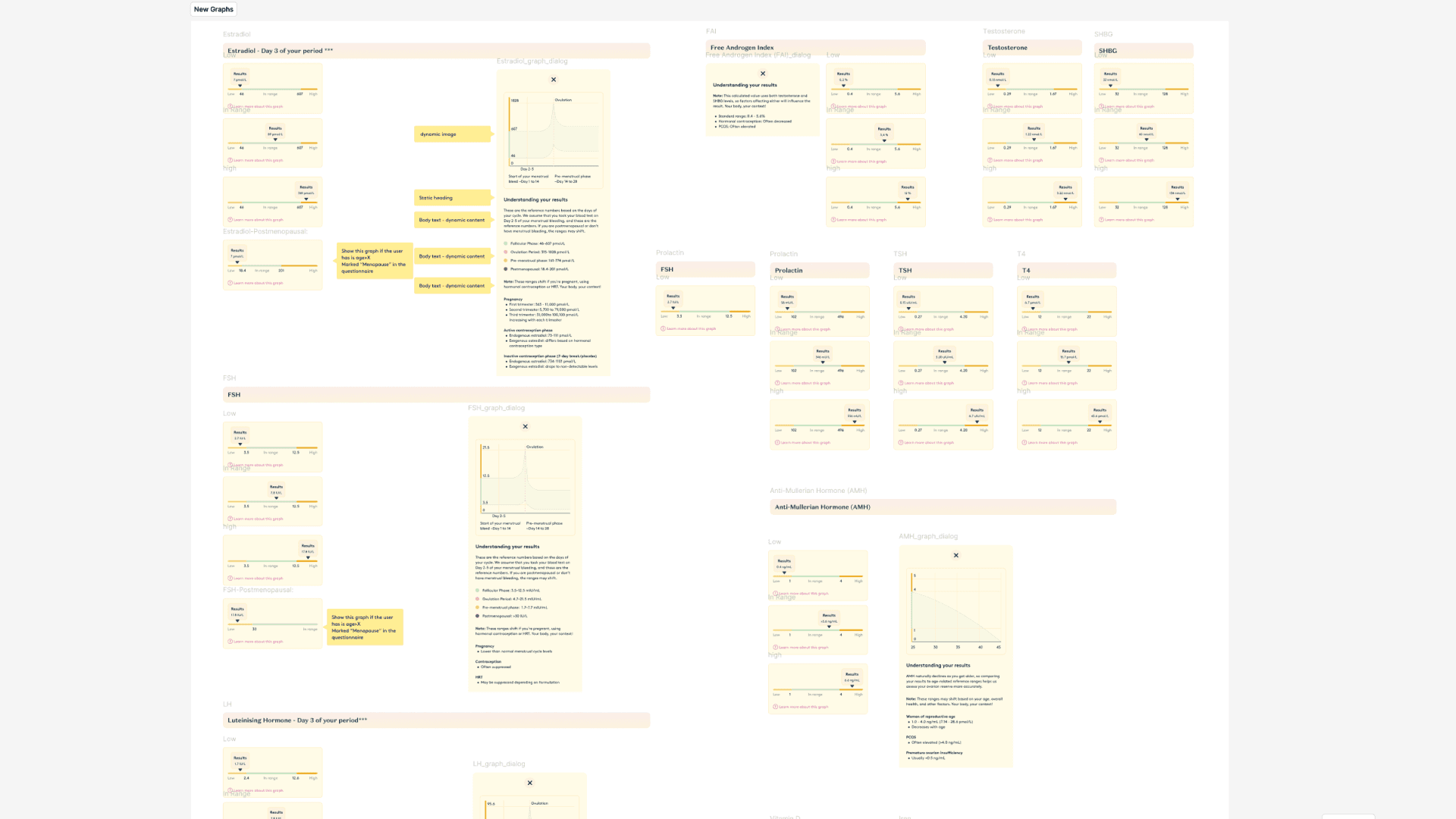
The results experience was the hardest problem in the project. Hormonal data is inherently complex and context-dependent. A result outside a reference range can signal something meaningful, something entirely normal given cycle phase, or simply a variation that needs clinical framing rather than alarm. Surfacing raw lab values was never an option.
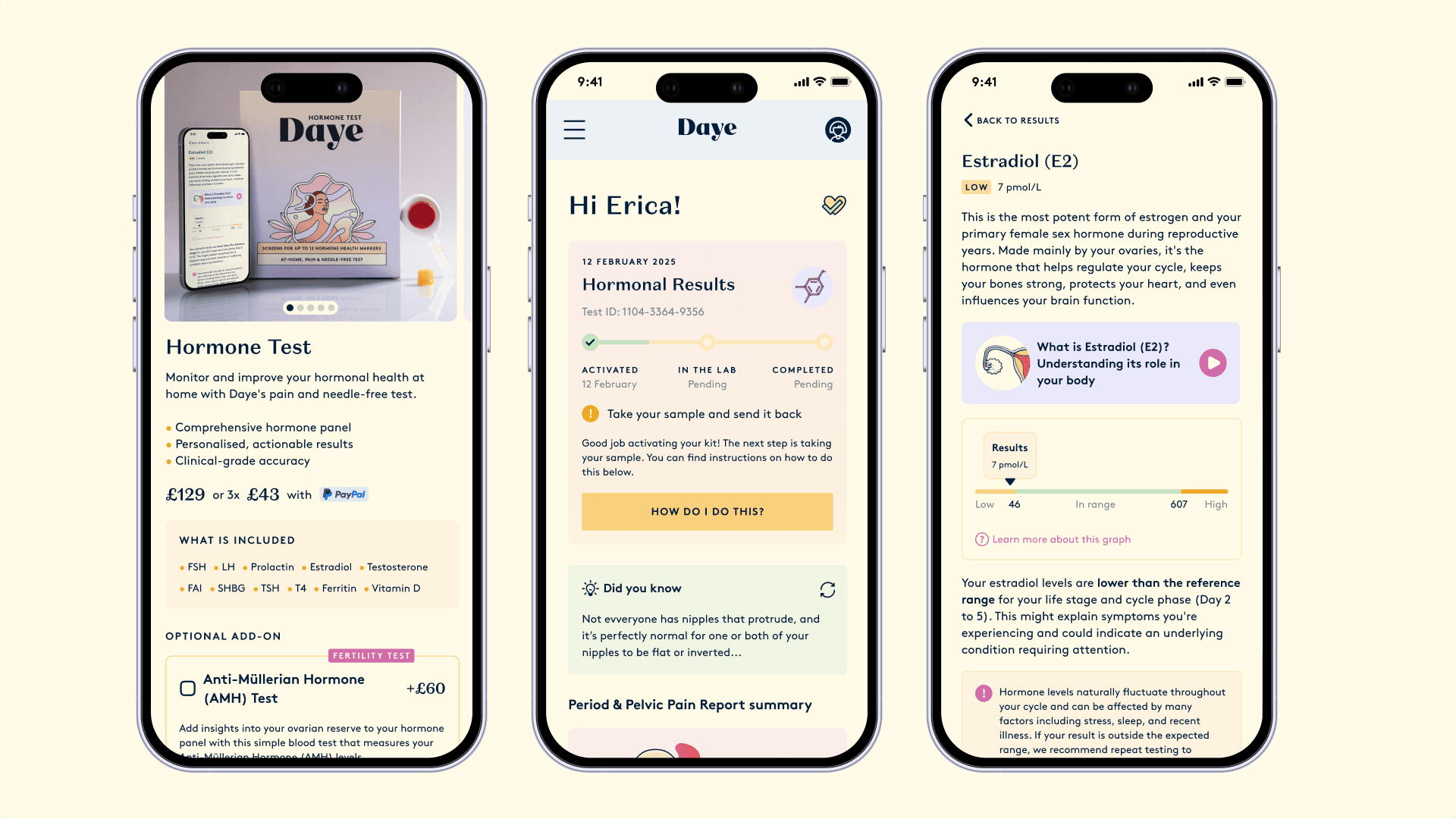
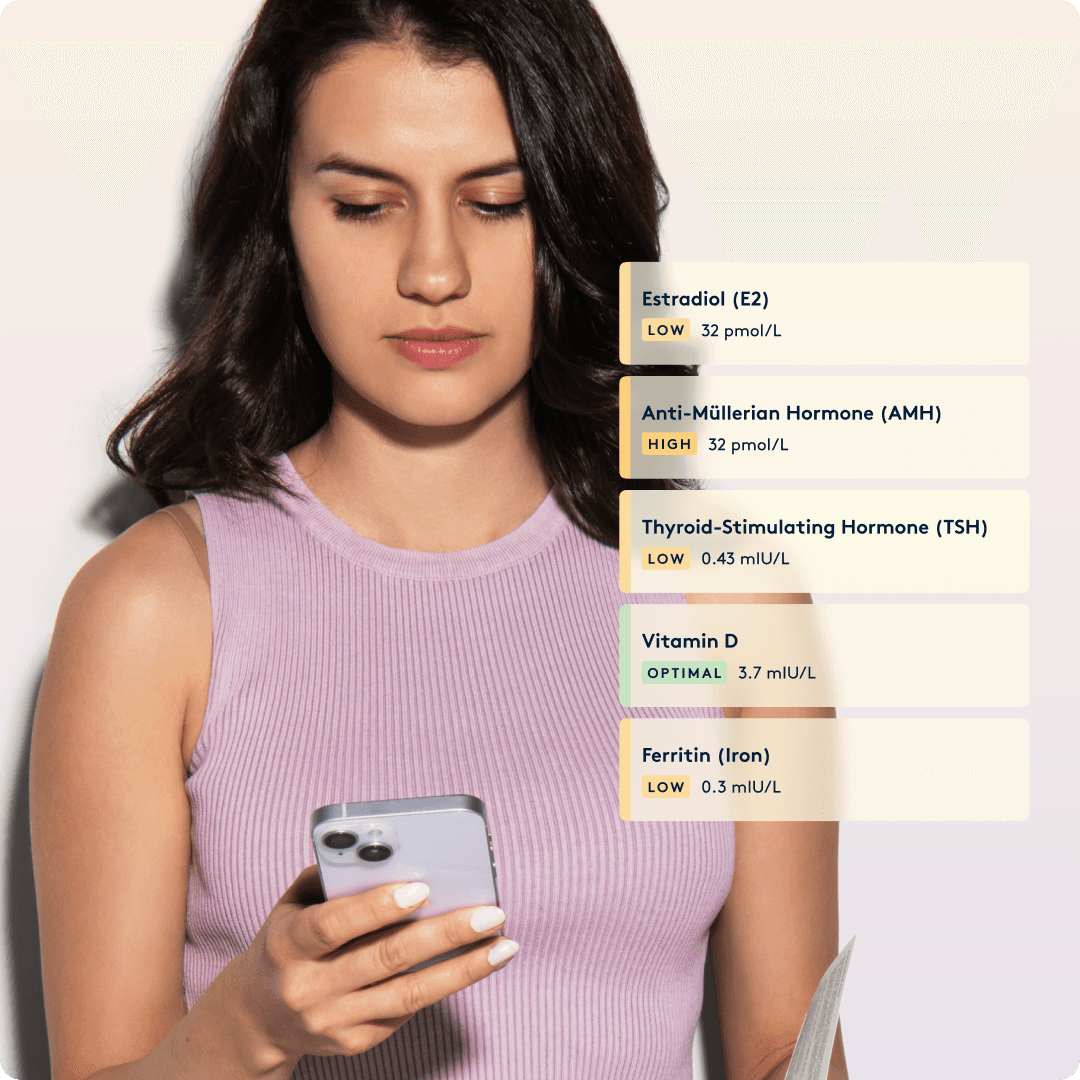
Working closely with our Medical Director, we developed a symptom-matching layer as the centrepiece of the results view. Rather than leading with biomarker numbers, results led with what those values might mean for the user, given what they had told us in activation. An AMH result on its own is abstract. Paired with context that connects it to the user's reported cycle irregularity and fertility concerns, it becomes something they can actually engage with. Clinical detail was available underneath for those who wanted it, but it was never the first thing they encountered.
After the results came the aftercare layer: personalised next steps mapped directly to the user's specific hormonal picture and symptom profile. Not generic lifestyle advice, but targeted guidance that reflected what the results actually showed. For users who wanted to go deeper, we designed an optional consultation pathway, connecting them with a hormone health specialist to review their results together. This was particularly important for results that needed nuanced clinical interpretation, where a written summary alone was not enough.
The consultation cross-sell was designed carefully. It had to feel like a natural next step for the users who needed it, not a pushy upsell for everyone. We tied the prompt directly to result context, so it appeared where it was genuinely relevant, not as a blanket CTA at the bottom of every report.
From first question to next steps: designing the full journey
We designed the experience as a complete journey, not a results screen with a purchase flow bolted on. Every stage had its own brief, its own user problem to solve, and its own balance to strike between clinical rigour and genuine usability.
The activation questionnaire was the foundation. Before a user collected their sample, we needed to capture the context that would make their results meaningful: cycle phase, contraception, known conditions, current symptoms, and what they were hoping to learn. The design challenge was precision versus drop-off. Too many questions and users abandon before they start. Too few and the results lack the context to be useful. We iterated this flow several times with clinical input until every question felt purposeful rather than interrogative, and the language felt like something a knowledgeable friend would ask, not a medical intake form.
The results experience was the hardest problem in the project. Hormonal data is inherently complex and context-dependent. A result outside a reference range can signal something meaningful, something entirely normal given cycle phase, or simply a variation that needs clinical framing rather than alarm. Surfacing raw lab values was never an option.
Working closely with our Medical Director, we developed a symptom-matching layer as the centrepiece of the results view. Rather than leading with biomarker numbers, results led with what those values might mean for the user, given what they had told us in activation. An AMH result on its own is abstract. Paired with context that connects it to the user's reported cycle irregularity and fertility concerns, it becomes something they can actually engage with. Clinical detail was available underneath for those who wanted it, but it was never the first thing they encountered.
After the results came the aftercare layer: personalised next steps mapped directly to the user's specific hormonal picture and symptom profile. Not generic lifestyle advice, but targeted guidance that reflected what the results actually showed. For users who wanted to go deeper, we designed an optional consultation pathway, connecting them with a hormone health specialist to review their results together. This was particularly important for results that needed nuanced clinical interpretation, where a written summary alone was not enough.
The consultation cross-sell was designed carefully. It had to feel like a natural next step for the users who needed it, not a pushy upsell for everyone. We tied the prompt directly to result context, so it appeared where it was genuinely relevant, not as a blanket CTA at the bottom of every report.
Testing early, fixing fast, keeping the squad in the loop
We tested early and continuously, not at the end. The goal was never to validate a finished design. It was to surface friction and confusion quickly enough to fix it before it became expensive. We ran comprehension-focused sessions with real users throughout the design phase, paying close attention to two things: whether people understood what their results meant, and how they felt when they read them.
Emotional response mattered as much as comprehension. Hormone results can carry a lot of weight, particularly for someone who has been trying to conceive or has been experiencing unexplained symptoms for months. A screen that was technically accurate but felt cold or alarming was not good enough. We iterated on language and hierarchy until the results felt honest, grounded, and supportive without softening anything clinically important.
Because the whole squad was working closely together, fixes happened quickly. If a user testing session surfaced a comprehension issue with how a biomarker result was framed, we could bring it straight to our Medical Director the same day, agree on revised clinical copy, and have it in the next iteration within the week. The tight loop between design, clinical, and engineering meant we were never waiting on approvals or hand-offs. We just fixed it and moved.
Testing early, fixing fast, keeping the squad in the loop
We tested early and continuously, not at the end. The goal was never to validate a finished design. It was to surface friction and confusion quickly enough to fix it before it became expensive. We ran comprehension-focused sessions with real users throughout the design phase, paying close attention to two things: whether people understood what their results meant, and how they felt when they read them.
Emotional response mattered as much as comprehension. Hormone results can carry a lot of weight, particularly for someone who has been trying to conceive or has been experiencing unexplained symptoms for months. A screen that was technically accurate but felt cold or alarming was not good enough. We iterated on language and hierarchy until the results felt honest, grounded, and supportive without softening anything clinically important.
Because the whole squad was working closely together, fixes happened quickly. If a user testing session surfaced a comprehension issue with how a biomarker result was framed, we could bring it straight to our Medical Director the same day, agree on revised clinical copy, and have it in the next iteration within the week. The tight loop between design, clinical, and engineering meant we were never waiting on approvals or hand-offs. We just fixed it and moved.
Shipped fast, done well, and genuinely proud of what we built
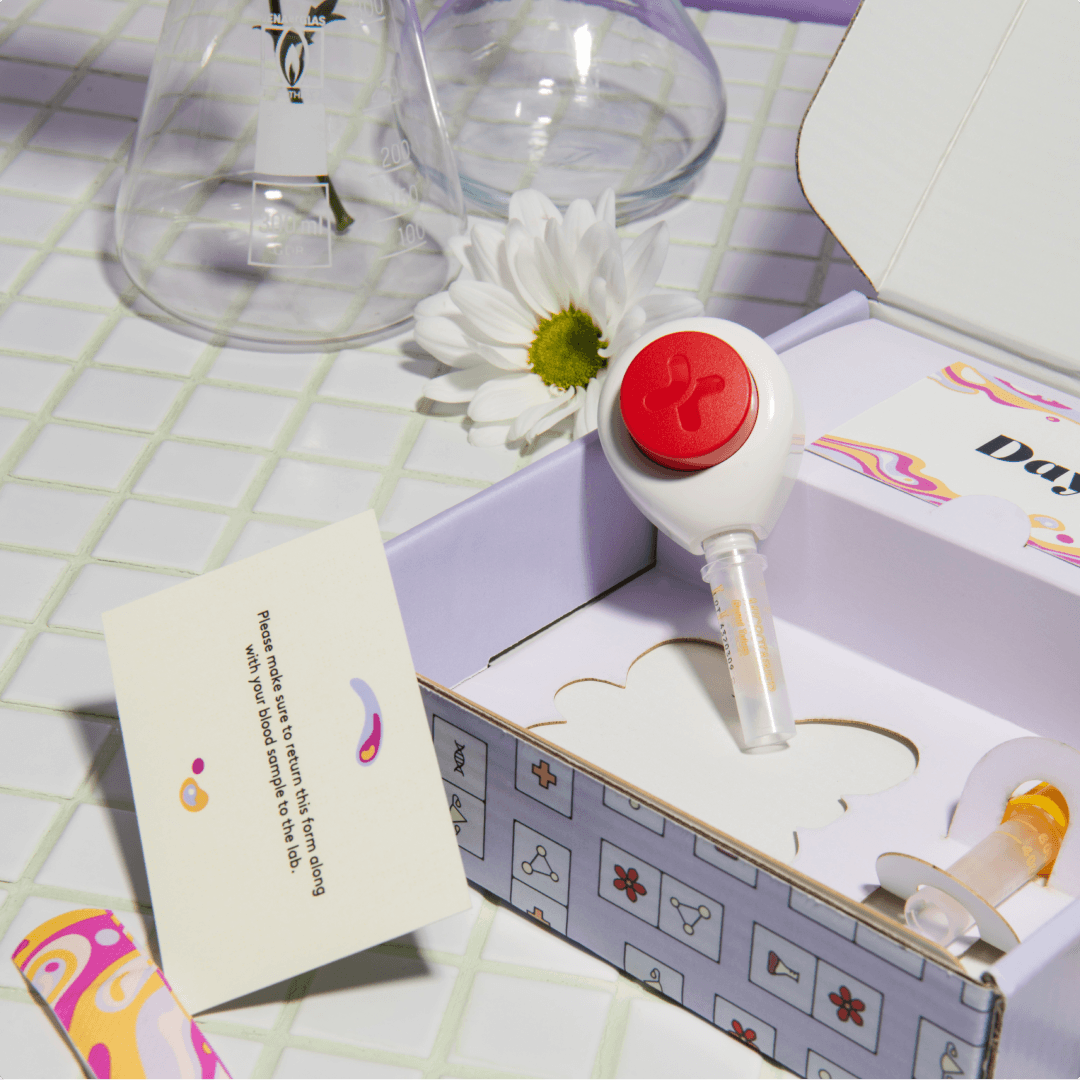
The Hormone Test launched on time in August 2025, met all regulatory requirements, and shipped with a complete end-to-end experience: activation, sample collection, lab processing, results with symptom-matched context, personalised aftercare, next steps, and an optional consultation pathway for users who wanted to go further. It opened a new user segment for Daye and added a meaningful revenue line from day one.
The harder outcome to quantify but more important to the work: women were understanding their results. Not just receiving them. The approach we built together, with clinical depth, plain language, and personalised context at every stage, proved that rigour and usability are not in tension. You just have to do the work to connect them.
What made this project work was the squad. A small group of people from clinical, engineering, operations, and marketing who trusted each other, moved quickly, and never compromised on what mattered. Six months from idea to launch, with no PM, no large agency, and no playbook to follow. It remains one of the most rewarding product experiences of my career, and a genuine testament to what a well-aligned team can build when everyone is invested in the outcome.
Shipped fast, done well, and genuinely proud of what we built
The Hormone Test launched on time in August 2025, met all regulatory requirements, and shipped with a complete end-to-end experience: activation, sample collection, lab processing, results with symptom-matched context, personalised aftercare, next steps, and an optional consultation pathway for users who wanted to go further. It opened a new user segment for Daye and added a meaningful revenue line from day one.
The harder outcome to quantify but more important to the work: women were understanding their results. Not just receiving them. The approach we built together, with clinical depth, plain language, and personalised context at every stage, proved that rigour and usability are not in tension. You just have to do the work to connect them.
What made this project work was the squad. A small group of people from clinical, engineering, operations, and marketing who trusted each other, moved quickly, and never compromised on what mattered. Six months from idea to launch, with no PM, no large agency, and no playbook to follow. It remains one of the most rewarding product experiences of my career, and a genuine testament to what a well-aligned team can build when everyone is invested in the outcome.
© Valentin Ivanov 2026
© Valentin Ivanov 2026
© Valentin Ivanov 2026